Macron just announced that France will station nuclear weapons in the rest of Europe for the first time. 8 EU states are interested, including the Netherlands, Greece, Poland, Sweden and Denmark. He also emphasized the pivotal role of Germany
Speaking from France’s ballistic-missile submarine base in Brittany, the French president said he “will never hesitate” to protect the country’s “vital interests” and promised “circumstantial deployments” with European allies.

www.euronews.com
Macron orders nuclear warhead increase and unveils 'forward deterrence' plan for Europe
...
“I have ordered an increase in the number of nuclear warheads in our arsenal,” the president said.
“We will no longer disclose the size of our nuclear arsenal, unlike in the past.”
“I will never hesitate to take the decisions that are essential to protect our vital interests. If we were to use our arsenal, no state could avoid it," Macron said in one of the strongest lines of the address.
France has an estimated 290 nuclear warheads, according to the latest figures released by the Stockholm International Peace Research Institute (SIPRI).
The speech comes as European security is being tested on multiple fronts, from Russia's full-scale invasion of Ukraine to the
expanding Iran war.
French officials had underlined that the address
was planned well in advance and remained on schedule despite the escalating Middle East conflict.
Eight EU countries on board, according to Macron
During his 45-minute speech, the French head of state outlined what he called a "progressive implementation" of a "forward nuclear deterrence strategy."
“The forward deterrence we propose is a distinct effort, perfectly complementary to NATO’s, both strategically and technically,” he said, positioning it as an additional European layer rather than a
NATO alternative.
Macron said France could carry out “circumstantial deployments” of strategic capabilities linked to nuclear deterrence “among our European allies,” beginning with joint exercises.
The French leader also said that eight European countries are interested in France's “forward deterrence” program, and insisted that the approach would be carried out “in full transparency with the United States.”
According to the president, these countries include the United Kingdom, Germany, Poland, the Netherlands, Belgium, Greece, Sweden, and Denmark.
These nations will be able to host “strategic air forces” from the French Air Force, enabling them to “spread out across the European continent”.
Soon after Macron's speech, Paris and Berlin issued a joint statement announcing a "high-ranking nuclear steering group" between the two countries.
"France and Germany have agreed to take first concrete steps beginning this year, including German conventional participation in French nuclear exercises and joint visits to strategic sites as well as development of conventional capabilities with European partners," said the statement sent to Euronews.
'No sharing of the final decision'
Macron further drew a hard line on sovereignty and control, stating there would be “no sharing of the final decision."
“There will also be no sharing of vital interests, which will remain a sovereign assessment for our country,” he added.
He also announced that Paris, London and Berlin would “work together on very long-range missile projects,” presenting it as part of a broader European effort to deter and defend in a more volatile security landscape.
“This will give us new options for managing escalation in a conventional manner,” the French president emphasised. This collaboration is part of the
European Long Range Strike Approach launched in 2024, which also includes Italy, Poland and Sweden.
Macron also announced that the future ballistic-missile submarine that will fly the French flag “will be named Invincible and will sail in 2036.”
France is the only nuclear power inside the EU, which is one reason Macron’s words were closely watched by European capitals.



 Freak
Freak
www.bbc.com

 Muerto por dentro







 Frikazo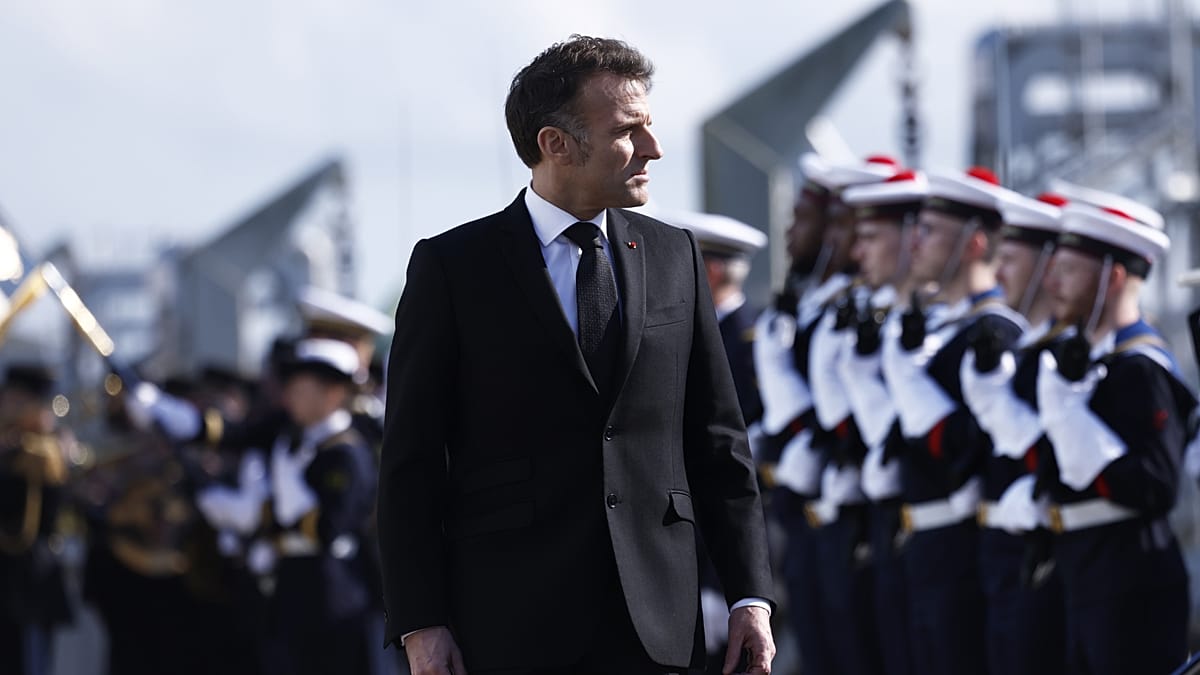


 Freak total